
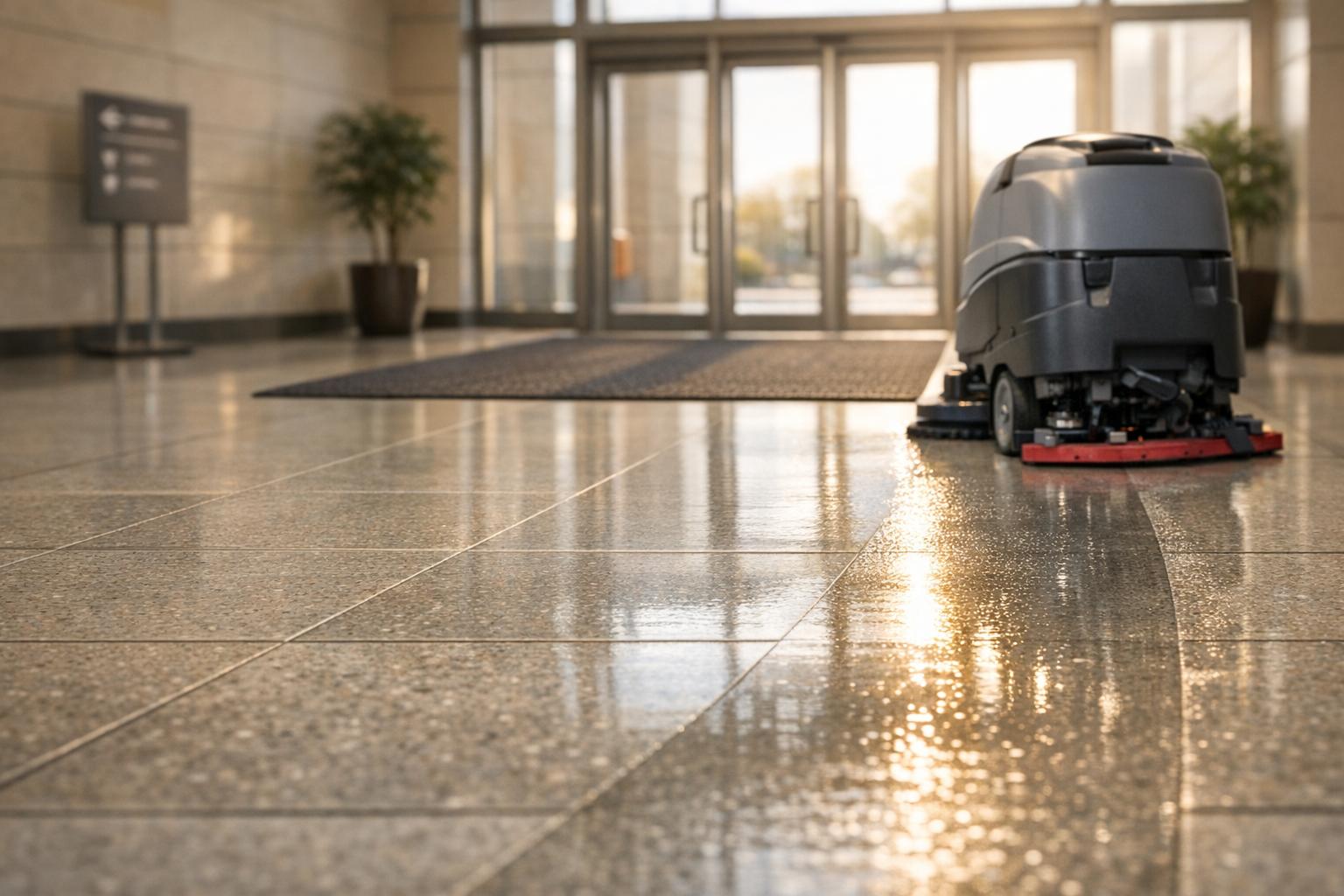
Commercial floors in high-traffic areas face constant wear and tear from foot traffic, spills, and dirt. Without proper care, they can become unsightly, unsafe, and costly to replace. This guide outlines 10 practical tips to maintain your floors, ensuring they stay clean, safe, and long-lasting. Key takeaways include:
- Daily dust mopping to prevent scratches and debris build-up.
- Vacuuming entryway carpets to reduce tracked-in dirt by up to 80%.
- Using auto scrubbers for efficient hard floor cleaning.
- Applying protective sealants every 3 months to shield surfaces.
- Adding anti-slip treatments to polished floors for safety.
- Scheduling deep cleaning every 3–6 months to remove embedded dirt.
- Cleaning floors in sections to minimise disruptions.
- Regularly inspecting for wear and damage to prevent costly repairs.
- Matching cleaners and tools to specific floor types for optimal care.
- Partnering with professionals like Withers Solutions for tailored maintenance plans.
Why it matters: Well-maintained floors enhance safety, improve appearance, and save money on replacements. Let’s dive into each tip for actionable insights.

10 Essential Floor Care Tips for High-Traffic Commercial Spaces
1. Dust Mop Daily to Remove Dirt and Debris
Protecting Your Floor’s Lifespan
Think of dirt and grit as tiny pieces of sandpaper grinding away at your floors. Every step taken in a busy lobby or hallway can scratch the surface and wear down the protective coating. By dust mopping daily, you can sweep away these abrasive particles, keeping your floors looking polished and extending the life of their sealant.
Keeping Things Spotless
Using microfibre mops is a game-changer. These mops are designed to pick up fine dust and debris instead of just moving it around. Dust mopping first is especially important because it prevents dry dirt from turning into muddy streaks during wet mopping, which could affect how well disinfectants work. In wet or wintery weather, areas like entryways and lobbies might need extra attention – dust mopping every few hours can help manage salt and moisture build-up. This proactive approach ensures cleanliness in even the busiest spaces.
Ideal for High-Traffic Areas
In large commercial spaces, efficiency is key. Dividing the floor into sections allows you to clean one area while keeping the rest accessible, avoiding disruptions. This method is especially useful in high-traffic zones like entryways, corridors, and cafés, where debris builds up quickly. As The Budd Group puts it:
"Proper floor care is foundational to your business’ success and safety."
By focusing on these busy spots, you can maintain a clean and welcoming environment.
Prioritising Safety
Dust mopping isn’t just about appearances – it’s also about safety. Removing loose debris and moisture reduces slip hazards, helping you stay compliant with workplace safety standards. As America’s Janitorial Service explains:
"A clean floor isn’t just good for appearances. It’s essential for creating a safe, OSHA-compliant workplace."
Plus, dust mopping can improve air quality by capturing allergens and pollen before they spread into the air. It’s a simple step with big benefits for both safety and health.
sbb-itb-0daae01
2. Vacuum Entryway Carpets Thoroughly Each Day
Effectiveness in Maintaining Cleanliness
Entryway carpets take the brunt of foot traffic, making them a hotspot for dirt and debris. Studies show that 70% to 80% of the dirt in a commercial building is tracked in on people’s shoes. Of that, dry particles like sand and grit make up about 75% of the soil found in commercial carpets. Surprisingly, a single square yard of commercial carpet can hold up to 1 pound of dirt – or nearly half a kilogram per square metre – while still looking clean. This makes daily vacuuming an absolute must for maintaining cleanliness in high-traffic areas.
The way you vacuum matters as much as how often you do it. Using slow, overlapping passes helps lift deeply embedded grit. For especially busy entryways, vacuuming twice daily is ideal. Equip yourself with vacuums certified by the Carpet and Rug Institute (CRI) Gold Seal of Approval. These machines are designed to remove soil effectively while keeping particulate emissions to a minimum. This routine not only keeps carpets looking fresh but also prolongs their lifespan and ensures a safer environment.
Durability and Longevity of the Floor
Heavily saturated entryway mats lose their ability to trap dirt effectively – up to 90% less dirt can be contained, allowing grime to spread further into the building. Dry soils like sand and gravel are especially damaging, acting like sandpaper on carpet fibres with every step. As Sanitaire Commercial puts it:
Efforts to protect the investment in carpet starts at the front door, and vacuuming is the primary defence against carpet deterioration.
Regular vacuuming can extend the life of your carpet to 8–10 years. During rainy or wet weather, switching to a wet/dry vacuum is a smart move to handle moisture without risking damage to your equipment. Additionally, don’t overlook the dirt trapped underneath mats – lifting and vacuuming beneath them periodically helps prevent shifting and reduces safety hazards.
Safety Considerations
Daily vacuuming does more than just protect the carpet; it also plays a key role in creating a healthier and safer environment. Carpets naturally collect allergens, dust, moisture, and bacteria. Without proper cleaning, these can contaminate the air and increase the risk of slips. Regular vacuuming keeps these risks at bay, ensuring a clean and secure space for everyone.
3. Use Auto Scrubbers for Regular Hard Floor Mopping
Effectiveness in Maintaining Cleanliness
In busy commercial spaces, keeping floors clean and hygienic is a constant challenge. Traditional mopping often falls short because it tends to spread dirt and contaminants rather than eliminating them. As Duplex Cleaning Machines highlights:
"A mop may seem convenient, but it spreads contaminants rather than removing them."
Auto scrubbers tackle this issue with a dual-tank system that keeps clean water and detergent separate from the dirty water. These machines do it all in one go – scrubbing, washing, and drying the floor. Their counter-rotating brushes are particularly effective at cleaning grout lines and textured surfaces, which are often missed with manual mopping. Many businesses have reported cutting cleaning time by 30–50% when switching to auto scrubbers. This not only speeds up the process but also helps maintain the floor’s condition over time.
Durability and Longevity of the Floor
By removing abrasive particles like grit and sand, auto scrubbers help prevent surface damage. According to Duplex Cleaning Machines, commercial floor scrubbers can significantly extend the lifespan of flooring by getting rid of embedded dirt and debris. Their vacuum suction system ensures minimal detergent residue, reducing long-term wear and tear. Plus, their ability to control moisture and recover water in a single pass prevents problems like warping or adhesive failure. This level of care not only preserves the flooring but also creates a safer environment for everyone.
Safety Considerations
Wet floors are a major hazard in workplaces, but auto scrubbers minimise this risk by leaving floors almost dry right after cleaning. This feature supports compliance with Work Health and Safety standards, which are critical for Australian commercial facilities. To keep the machine in top shape, remember to clean the squeegee blade after each use, empty the recovery tank daily to avoid bacteria and odours, and check the brushes or pads weekly for signs of wear. These small steps ensure both safety and efficiency in your cleaning routine.
4. Apply Protective Sealants to VCT and Tile Every 3 Months
Durability and Longevity of the Floor
Sealants act as a protective shield for VCT and tile, guarding against the wear and tear caused by heavy foot traffic, moisture, grease, and stains. Without this barrier, these elements can lead to permanent damage over time. Beau Sleeman from Clean Group highlights the importance of regular deep cleaning:
Deep cleaning, including carpets, tiles, grout and all, is essential… at least once every quarter.
Before applying a sealant, it’s crucial to deep clean the floor using a heavy-duty cleaner to eliminate any dust or debris. For tiled surfaces, start with a primer to ensure the sealant penetrates effectively and lasts longer. Once applied, allow the sealant to set for 12 hours before light use and a full 24 hours for complete curing. Following this routine every three months not only prevents damage but also keeps costly replacements at bay. Plus, the sealant simplifies everyday cleaning by creating a durable, protective layer.
Effectiveness in Maintaining Cleanliness
Sealants fill tiny gaps on the floor’s surface, making it smoother and less likely to trap dirt and germs. This improvement means daily sweeping and mopping become much more effective. In fact, professional disinfection on a well-maintained, sealed floor can remove up to 99.99% of germs, including coronavirus. Modern sealers have advanced to the point where they can replace traditional waxing and buffing, cutting down on repetitive, time-consuming maintenance. To maintain the sealant’s effectiveness, use a specialised cleaner designed specifically for sealed floors during your regular cleaning routine.
Suitability for High-Traffic Commercial Environments
Busy areas like lobbies, hallways, and retail spaces endure constant wear and tear. According to Tile Armor:
High-traffic floors deserve more than a quick mop.
Quarterly sealing is particularly critical for these spaces to maintain both the floor’s appearance and structural integrity. When applying the sealant, use at least four coats with a lambswool applicator or microfibre mop to ensure an even finish and avoid leaving marks. For added protection, schedule a professional "strip and seal" service annually. This process removes old layers of sealant and restores a glossy finish, providing a strong barrier against scratches and abrasions.
5. Add Anti-Slip Treatments to Polished Floors
Safety Considerations (e.g., Slip Resistance)
Polished floors in high-traffic commercial spaces may look sleek and professional, but they can also become hazardous, especially when wet or dusty. In fact, 77% of workplace slip injuries happen on wet restroom floors, and building entrances account for up to 80% of tracked-in dirt. These numbers highlight the importance of anti-slip treatments to minimise risks and potential liabilities.
Gina Mace from JaniSource emphasises the role of proper maintenance:
"Proper cleaning not only enhances appearance but also extends the lifespan of floors and reduces slip-and-fall risks".
Applying anti-slip treatments to polished surfaces significantly improves safety. Key areas like stair edges and emergency exits should be prioritised for these treatments. Beyond safety, these measures also help preserve the floor’s appearance and functionality over time.
Durability and Longevity of the Floor
Anti-slip coatings do more than just improve safety – they also protect polished floors from wear and tear. By reducing the impact of abrasive dirt, these treatments can extend the lifespan of polished surfaces, increasing replacement cycles from 3–5 years to 5–7 years.
For polished concrete in busy areas, regular maintenance is key. Use a durable solvent-based sealer that needs reapplication every 3–5 years, or opt for a water-based sealer lasting 5–10 years. Resealing every 1–2 years is recommended for high-traffic zones. Cleaning should always involve pH-neutral cleaners, as acidic or alkaline solutions can damage both the anti-slip properties and the polished finish.
This combination of safety and durability makes anti-slip treatments an essential investment, especially in environments with heavy foot traffic.
Suitability for High-Traffic Commercial Environments
Areas like lobbies and corridors, where moisture and debris accumulate quickly, benefit greatly from anti-slip treatments. These treatments reduce the porosity of polished floors, preventing spills and grime from seeping in and making daily cleaning easier.
To further enhance safety, consider adding walk-off mats (1.8–3 metres long) at entrances to trap moisture and dirt. However, avoid rubber-backed mats, as they can cause permanent discolouration on polished concrete. When combined with regular cleaning and protective sealants, anti-slip treatments are a crucial part of maintaining polished floors in high-traffic spaces. They simplify upkeep while ensuring both safety and longevity.
6. Deep Clean with Hot Water Extraction Every 3-6 Months
Effectiveness in Maintaining Cleanliness
Hot water extraction (HWE) goes beyond the capabilities of daily cleaning routines. This method uses high-pressure water combined with heat to break down stubborn dirt, oily residues, and environmental grease that often accumulate in high-traffic areas like lobbies and hallways. It effectively flushes out deeply embedded soil and contaminants, leaving carpets refreshed and free of grime. The powerful suction in HWE systems ensures dirty water is removed entirely, preventing the reintroduction of contaminants.
Mike Gosson from Parish Maintenance Supply highlights its efficiency:
Hot water extraction is simply the best way to rinse a carpet of its contaminants.
Notably, more than 85% of carpet manufacturers recommend this technique. When paired with certified disinfectants, professional HWE can eliminate up to 99.99% of germs and bacteria commonly found in commercial carpets. Beyond cleanliness, this method revitalises carpet fibres, restoring their original texture and bounce after being compressed by heavy foot traffic.
Durability and Longevity of the Floor
Hot water extraction is not just about cleanliness – it also protects your flooring investment. By removing deeply embedded dirt and grit, which act like abrasives, this method prevents premature wear and tear on carpet fibres, including fraying, matting, and fading. According to Stanley Steemer, untreated contaminants can weaken carpet fibres over time, causing permanent damage.
Additionally, HWE clears away chemical residues that attract dirt, prolonging the lifespan of floor materials. Regular deep cleaning helps restore the texture of the fibres and maintains their structural integrity, reducing the likelihood of costly repairs or replacements. To keep carpets in top condition and preserve hygiene, schedule professional HWE services every 3–6 months.
Safety Considerations
Proper moisture management is key when using hot water extraction. It’s essential to allow carpets to dry completely – this can take several hours – before placing furniture back or reopening the area to foot traffic. Professional truck-mounted HWE systems excel in this regard, drying carpets within hours, whereas DIY rental machines may leave them damp for days.
To speed up drying and minimise downtime in busy areas, use high-powered fans or ensure proper ventilation. For moisture-sensitive surfaces like hardwood, avoid excessive water use and promptly clean up any spills to prevent damage or slip hazards. Additionally, always choose pH-balanced cleaners that match your floor type, as harsh chemicals can dull hardwood finishes or make tile grout more porous. Vacuuming the area beforehand is also essential, as it removes loose debris and allows the extraction machine to focus on deeply embedded dirt. This approach complements daily maintenance and strengthens your overall floor care routine.
Pro Tips on How to Care for and Maintain Hard Floors in Commercial Buildings
7. Clean Floors in Sections to Reduce Disruptions
This approach keeps high-traffic areas safe and functional while ensuring thorough cleaning.
Suitability for High-Traffic Commercial Environments
In bustling spaces like retail stores, lobbies, or office hallways, shutting down the entire floor for cleaning isn’t feasible. Sectional cleaning solves this by dividing the space into smaller zones. This way, parts of the area can stay open while others are cleaned or drying. For businesses with long operating hours, this method keeps operations running smoothly.
By working in sections, cleaning staff can focus on specific areas, especially those with heavy foot traffic. Instead of rushing through large spaces, they can provide more detailed care. Start from the farthest corner and move towards the exit to prevent dirt from being tracked back into cleaned areas. This ensures every section is cleaned thoroughly and efficiently.
Effectiveness in Maintaining Cleanliness
Sectional cleaning prevents the common problem of dirt being spread from one area to another. By isolating zones, contaminants are completely removed instead of being redistributed. Before starting, clear any obstacles and pre-treat tough stains for better results. Use overlapping mop strokes, working from the edges inward, to cover every inch effectively.
It’s also crucial to replace mop heads and cleaning solutions between sections to avoid cross-contamination. With 85% of people preferring visible signs of cleanliness in the spaces they visit, this systematic approach ensures the spotless results that customers and employees expect.
Safety Considerations
Wet floors are a major cause of slips and falls in commercial spaces. Sectional cleaning minimises this risk by keeping the "wet zone" small and manageable. Always place clear "Wet Floor" signs at the entry and exit points of the section being cleaned. You can also use temporary barriers or rearrange furniture to redirect traffic away from the area being worked on. This keeps everyone safe while maintaining a clean environment.
8. Check Floors Regularly for Wear and Damage
Beyond daily cleaning routines, regular inspections are essential to catch damage that might go unnoticed during routine maintenance. Daily cleaning can also reveal early signs of wear, such as scuff marks, dulling finishes, or dirt that resists standard cleaning methods, allowing for prompt intervention before the problem worsens.
Not only does this improve safety, but it also helps ensure timely repairs, ultimately extending the life of your flooring.
Durability and Longevity of the Floor
Different flooring materials show wear in unique ways. For instance, hardwood floors may lose their sheen if moisture seeps through a damaged sealant, while tile grout can become porous and stained when exposed to harsh chemicals that strip away its protective layer. If floors still appear dirty after cleaning or bacteria seem to linger beneath the surface, it’s worth consulting professional cleaners who have the tools and expertise to address these deeper issues.
For sealed vinyl or linoleum floors with surface scratches, specialised detergents can remove the top layer of sealer for a quick refresh. To maintain durability, tile grout should be resealed annually, and high-traffic commercial floors should undergo a full strip and seal every 12 to 18 months, depending on usage.
Safety Considerations
Early detection of wear and tear is vital for preventing safety hazards. For example, damaged sealants can make floors either slippery or sticky, increasing risks in busy areas. Routine inspections during cleaning can help identify issues like loose tiles, cracks, or worn patches in high-traffic zones such as hallways or reception areas. If floors become slippery due to wear, applying certified anti-slip treatments right away is crucial to maintain workplace safety standards.
As Beau Sleeman, an industry expert, puts it:
Regular maintenance not only preserves the aesthetic appeal of floors but also extends their lifespan, saving our businesses a lot of money on repairs and replacements
9. Match Cleaners and Tools to Your Floor Type
Using the wrong cleaners or tools can harm your floors and speed up wear and tear. While daily maintenance and deep cleaning are essential, choosing the right tools and cleaning products for each surface is just as important. This ensures your floors stay protected and last longer.
Durability and Longevity of the Floor
For surfaces like vinyl (VCT, LVT), polished concrete, and natural stone, pH-neutral cleaners are a must. Westlink Commercial Cleaning highlights:
Different floor surfaces demand different cleaning methods, equipment, and products. Using the wrong approach can cause damage, dulling, or premature wear.
Acidic cleaners can permanently damage marble and terrazzo by etching the surface, while strong alkaline solutions can strip vinyl’s protective sealants, causing yellowing and cracking over time.
When it comes to timber floors, stick to specialised wood cleaners and low-moisture cleaning techniques to avoid warping or swelling. Harsh chemicals can ruin hardwood’s finish and overall quality. For tiled floors, where grout can become porous, avoid bleach and other harsh chemicals that break down sealants. Instead, opt for alkaline or grout-specific cleaners, and reseal the grout annually to maintain its integrity.
Effectiveness in Maintaining Cleanliness
Proper chemical compatibility is key for preserving each floor type. Using the correct dilution prevents surface damage and avoids leaving sticky residues behind. Industrial epoxy floors, for example, require specially formulated commercial degreasers that won’t weaken the coating bond. Pair these with ride-on auto scrubbers for efficient cleaning in larger spaces.
The tools you use also matter. Auto scrubbers are excellent for floors that can handle their mechanical action, but using them on unsuitable surfaces can cause damage. The right equipment not only ensures effective cleaning but also helps maintain a safe and polished appearance.
Safety Considerations
Controlling moisture during cleaning can improve slip resistance. Tools like microfibre mops and automated scrubbers are safer choices compared to sponge mops, which often push dirty water into grout lines, increase drying time, and leave surfaces slippery. A colour-coded system – Red for toilets, Green for kitchens, and Blue for general areas – helps prevent cross-contamination in high-risk zones.
For rubber and safety flooring with textured surfaces, use specialised scrubbing methods to clean deeply without compromising the anti-slip properties. Always place warning signs until floors are completely dry to minimise the risk of slips or falls.
10. Work with Withers Solutions for Custom Floor Maintenance

Keeping floors in high-traffic areas in top condition can feel like a daunting task. That’s where partnering with a professional like Withers Solutions makes all the difference. They provide customised maintenance plans designed to suit your specific environment and budget, ensuring your floors stay in great shape. Plus, their services complement other floor care strategies, creating a complete approach to maintaining every surface.
Keeping Floors Spotless
Withers Solutions takes a tailored approach to floor cleaning. They assess factors like foot traffic, hygiene requirements, and the types of flooring in your space. Whether you have hardwood, vinyl, or tile, they use cleaning methods and approved agents suited to each material, ensuring your floors are maintained properly and effectively.
Extending the Life of Your Floors
Protecting your floors is an investment, and Withers Solutions helps you get the most out of it. Backed by over 30 years of experience, they offer a comprehensive service that combines floor care with shopfitting and repair expertise. This ensures that not only do your floors look great, but they also last longer, saving you on costly replacements. Their perfect 5.0/5 rating on hipages highlights their dedication to delivering reliable, high-quality service.
Prioritising Safety
Safety is a critical concern in busy spaces, and Withers Solutions takes it seriously. They ensure your floors meet slip-resistance standards while staying easy to clean. Their methodical cleaning process involves dividing larger areas into smaller sections, allowing for proper drying time and minimising disruptions. To further enhance safety, they use clear warning signs during cleaning to prevent accidents. This thoughtful approach ties together cleanliness, durability, and safety, offering a complete solution for your floor care needs.
Conclusion
High-traffic commercial floors demand consistent care to safeguard both your investment and the safety of everyone who uses them. The strategies outlined here – from daily dust mopping to quarterly applications of sealant – work together to prolong your floor’s lifespan, minimise safety risks, and uphold a polished, professional image that benefits your business.
Failing to maintain your floors can lead to more than just a shabby appearance. It increases the risk of slips, legal liabilities, and non-compliance, especially in industries with strict regulations like healthcare or food service. Additionally, high-traffic areas can quickly become hotspots for germs and bacteria, making regular cleaning and disinfection essential for protecting the health of employees and visitors alike.
A tiered maintenance plan is your best bet. Combine daily tasks with periodic deep cleaning and protective treatments to keep your floors in excellent shape without overburdening your staff. Regular inspections are also crucial – they let you spot signs of wear or damage early, helping you address problems before they escalate into costly repairs or the need for premature replacements.
FAQs
How do I choose the right cleaner for my floor type?
To choose the best cleaner, start by identifying your flooring material. Different surfaces need specific care:
- Tile and stone: Stick to non-acidic cleaners to avoid damage.
- Vinyl and laminate: Opt for pH-neutral cleaners for safe maintenance.
- Hardwood floors: Use products designed specifically for wood.
Think about your cleaning requirements too. For instance, heavy-duty degreasers are ideal for tackling greasy concrete, while milder cleaners are perfect for everyday upkeep. Selecting a cleaner tailored to your floor type not only protects the surface but also ensures effective cleaning.
How often should high-traffic floors be sealed or resealed?
High-traffic floors generally need sealing or resealing every 1 to 3 years to maintain their strength and appearance. The timing can vary based on the flooring material and how much daily wear it endures. Consistent upkeep is key to keeping these surfaces protected and looking polished, especially in bustling commercial environments.
When should we hire Withers Solutions for floor maintenance?
When it comes to keeping high-traffic commercial spaces clean, safe, and professional-looking, Withers Solutions is the team to call. They specialise in creating customised cleaning strategies designed to protect your floors from wear and tear while ensuring they remain spotless and visually appealing.
Leave a Reply