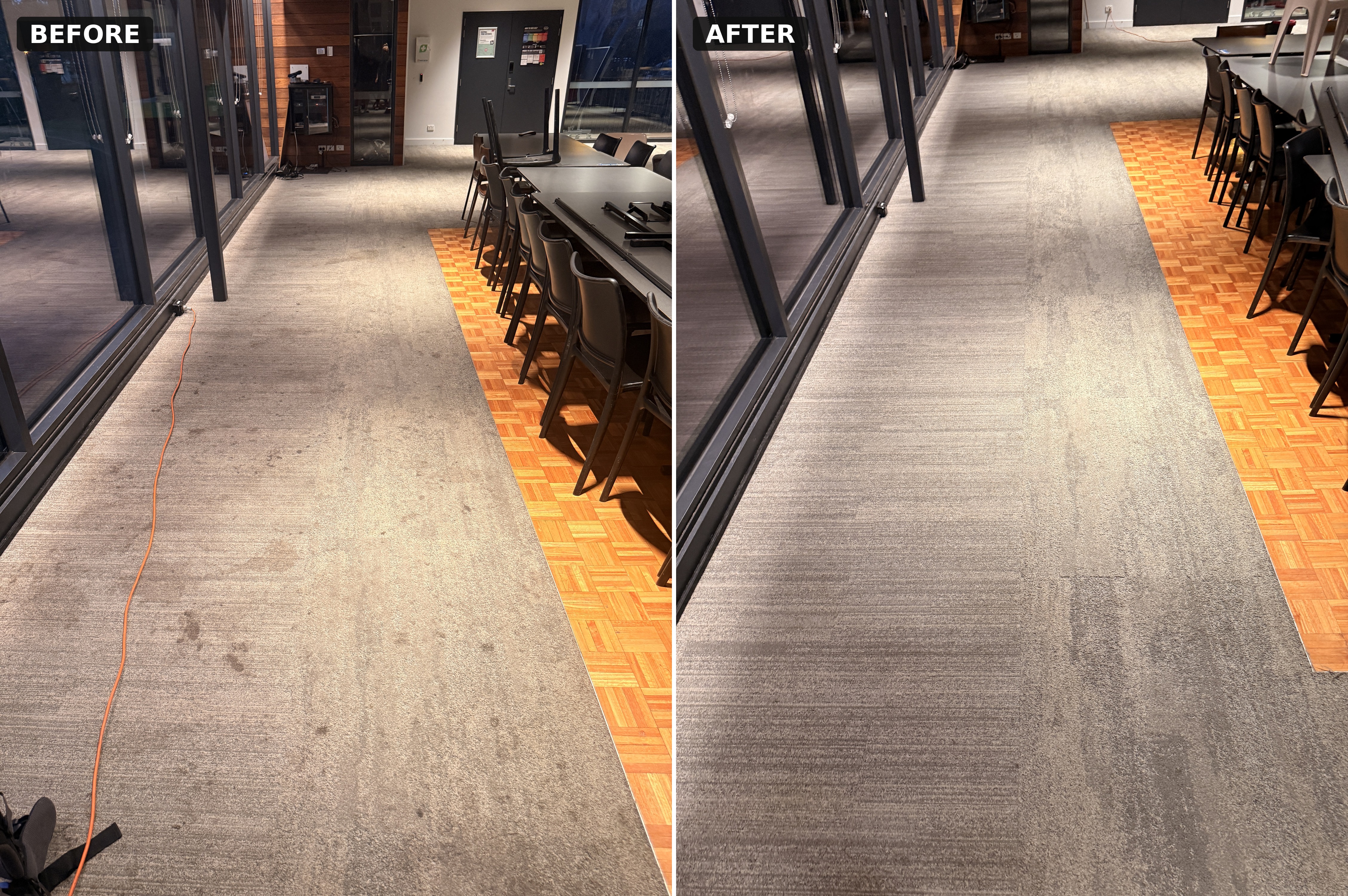
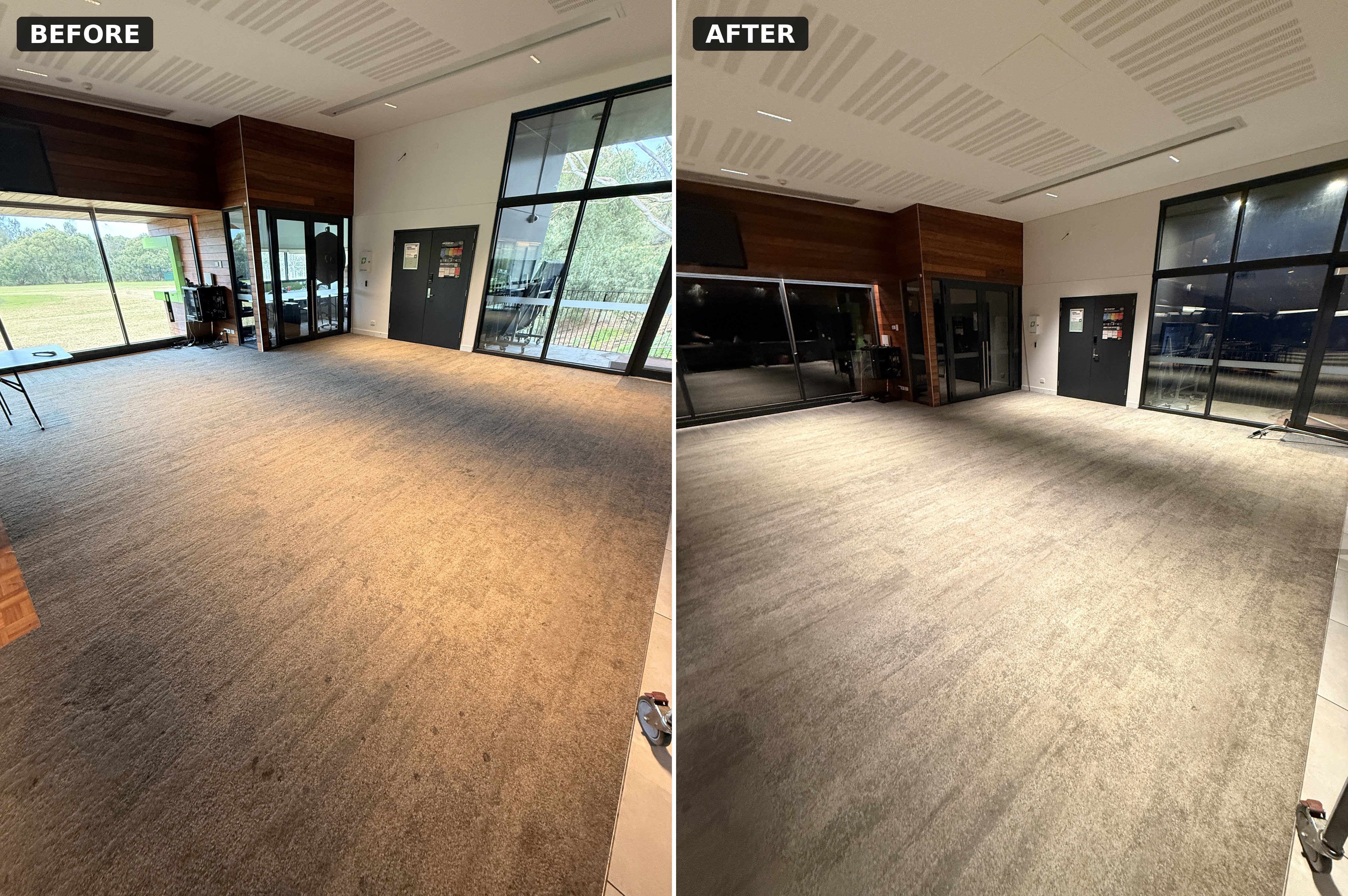
Dirty carpets in commercial spaces can harm air quality, health, and your budget. Here’s how to deep clean them effectively in 7 steps.
Commercial carpets endure heavy use, trapping dirt, allergens, and bacteria. While regular vacuuming helps, it doesn’t remove deeply embedded contaminants. Deep cleaning improves air quality, reduces health risks, and extends carpet lifespan by up to 5 years, potentially saving thousands in replacement costs. Here’s a quick guide:
- Vacuum thoroughly to remove loose dirt.
- Treat stains with appropriate solutions.
- Apply pre-spray and let it sit.
- Agitate fibres with a brush or machine.
- Use hot water extraction for deep cleaning.
- Dry carpets using fans or dehumidifiers.
- Inspect and maintain for long-term care.
Professional-grade equipment like HEPA vacuums, hot water extractors, and air movers are key. Stick to Australian standards (AS/NZS 3733) to meet compliance and protect warranties. Deep cleaning every 6–12 months keeps carpets clean, hygienic, and in great condition.

7-Step Commercial Carpet Deep Cleaning Process Infographic
Deep Cleaning Commercial Carpets for Germ Removal In 5 Steps
sbb-itb-0daae01
Equipment and Cleaning Products You’ll Need
Deep cleaning commercial carpets calls for heavy-duty equipment capable of tackling tough stains and large spaces effectively.
Essential Equipment for Deep Cleaning
Start with HEPA-filtered industrial vacuums, which can remove up to 80% of dry soil. This prevents dirt from turning into mud during the wet cleaning phase.
For the deep cleaning itself, hot water extraction machines – often called steam cleaners – are indispensable. These machines inject hot water (70–90°C) and detergent into the carpet fibres under high pressure, breaking down grease and grime. They then use powerful suction to remove the dirty water. Professional truck-mounted extractors are particularly effective, offering a vacuum lift of 400 to 600 inches of water, far surpassing the 100 inches of standard rental units. If you’re looking for local options, SV Equipment (Steamvac), an Australian-owned brand, offers the Steamvac Apollo HP, which delivers 1,600 PSI with twin 1,200W motors.
Agitation equipment, like counter-rotating brush (CRB) machines or rotary brushes, is another must-have. These tools loosen embedded dirt and help lift the carpet pile. To speed up drying times – typically between 4 and 12 hours – air movers and dehumidifiers are highly effective.
Once you have the right equipment, pairing it with suitable cleaning solutions is key to achieving the best results.
Choosing the Right Cleaning Solutions
The cleaning products you use are just as important as the equipment. High-traffic commercial areas often need a mix of pre-sprays, hot water extraction chemicals, and encapsulation cleaners. Pre-sprays are applied to loosen soil and grease, typically left to "dwell" for 5–10 minutes before extraction.
Always test for colourfastness before using any product. Apply a small amount of a 1:16 detergent and warm water mix on an inconspicuous area, then blot with a white cloth to check for dye transfer. For wool or wool-blend carpets, stick to a pH range of 7–9 to protect fibres and maintain their colour.
For an eco-friendly approach, consider detergents from brands like Agar, which offer sustainable cleaning products. Natural alternatives – such as white vinegar, baking soda, and hydrogen peroxide – can work well for light-coloured carpets. For organic stains like coffee, oxy-based cleaners are particularly effective. These use active oxygen to break down stains without relying on harsh chemicals.
Hot Water Extraction vs Dry Cleaning Methods
When it comes to deep cleaning, there are two main methods to consider: hot water extraction and dry (or encapsulation) cleaning. Each has its own strengths and is suited to different needs:
| Feature | Hot Water Extraction | Dry/Encapsulation Cleaning |
|---|---|---|
| Primary Equipment | High-pressure extractor (portable or truck-mounted), wands, heaters | CRB machine or rotary machine with pads |
| Cleaning Agents | Liquid detergents, emulsifiers, acid rinses | Absorbent compounds or polymer sprays |
| Moisture Level | High; flushes fibres with hot water | Very low; "barely damp" |
| Drying Time | 4–24 hours depending on airflow | 30–60 minutes; usable immediately |
| Cleaning Power | Deep clean; removes embedded dirt and allergens | Surface to mid-level clean; ideal for interim maintenance |
| Cost per m² | AUD $4.50–$6.50 | AUD $3.50–$5.00 |
Hot water extraction is perfect for heavy-duty cleaning, while dry cleaning offers a quicker solution for routine maintenance. Armed with the right tools and cleaning products, you’re ready to dive into the 7-step deep cleaning process outlined later.
Preparing the Area Before Cleaning
Getting the area ready is a crucial step for achieving a thorough and professional carpet clean. Before you start using any cleaning equipment, take some time to clear the space, evaluate the carpet’s condition, and remove any surface debris that could hinder your cleaning process.
Remove Furniture and Obstacles
Begin by moving lightweight furniture like chairs, small tables, and filing cabinets to ensure complete access to the carpeted area. For heavier furniture, use protective barriers such as aluminium foil, plastic sheets, or caps under the legs to prevent any moisture damage. If moving large items isn’t possible, clean the carpet in sections and allow each area to dry before repositioning the furniture.
Clear away any boxes, loose cables, or other items that could obstruct the cleaning process. These areas often trap dust and dirt that needs to be addressed during cleaning. Make sure to power down and unplug electronic devices before moving them, and encourage a "Clean Desk Policy" so staff can secure any confidential materials.
Check for Stains and Damage
Take a systematic approach to inspect the area for stains, discolouration, or any damage. Look at the carpet from different heights and angles, as natural daylight can highlight issues that artificial lighting might not reveal.
Feel the carpet for rough patches, depressions, or areas where the pile has lost its bounce. Use a moisture meter to check for hidden water damage – readings above 16% are a warning sign of potential issues beneath the surface. Identify the carpet’s fibre type (such as wool, nylon, or polyester) by checking the manufacturer’s label, as this will determine which cleaning solutions are safe to use. Take detailed photos of the area before starting; this helps track progress and can be useful for warranty claims if needed.
"Over 16 percent moisture readings are a quiet signal that water damage may already be hiding beneath your feet." – Yarra Valley Carpet Cleaning
Vacuum Loose Dirt and Debris
Vacuuming is a must before deep cleaning – it stops loose dirt from turning into a muddy mess when water is introduced. This step ensures the extraction process focuses on removing embedded grime and stains rather than surface particles.
Use an industrial-grade HEPA vacuum with a rotating brush to lift dirt and agitate carpet fibres, concentrating on high-traffic areas like entryways and corridors. Don’t forget to use vacuum attachments to clean edges and corners, where dust tends to accumulate. While vacuuming, trim any frayed fibres with scissors to prevent them from getting caught in the cleaning equipment.
"Effective vacuuming ensures that the deep cleaning process focuses on removing embedded dirt and stains rather than surface particles." – A1 Carpet Cleaning
Now that your area is free from obstacles and loose debris, you’re ready to move on to the deep cleaning phase.
The 7 Steps to Deep Clean Commercial Carpets
Once your workspace is prepped and ready, it’s time to dive into the deep cleaning process. These seven steps outline a professional approach tailored for high-traffic Australian commercial spaces.
Step 1: Thorough Vacuuming
Start with a detailed vacuuming session. Move the vacuum slowly – about 3 seconds per linear metre – to allow it to pull out deeply embedded particles. This step alone can remove up to 80% of dry soil, preventing it from turning into mud during the wet cleaning process. Use a cross-hatch method (north–south, then east–west) and make at least three passes in areas that see heavy foot traffic. Adjust your vacuum settings based on the carpet type: use a rotating brush for cut-pile carpets to loosen fibres, and switch to suction-only for loop-pile or Berber carpets to avoid damage. Don’t forget to clean along skirtings and corners with a crevice tool to pick up hidden debris.
Step 2: Treat Stains and Apply Pre-Spray
Next, tackle visible stains with treatments specific to the stain type. Here’s a quick guide:
| Stain Type | Treatment | Action |
|---|---|---|
| Water-based (Mud, soda) | Neutral detergent solution | Mist and blot |
| Oil/Grease (Makeup, food) | Citrus solvent or isopropyl alcohol | Dab from edges inward |
| Protein (Pet accidents, food) | Enzymatic cleaner | Saturate and let sit for 10–15 minutes |
| Tannin (Coffee, tea, wine) | 1:1 white vinegar and water mix | Flush, blot, and neutralise |
Always blot stains gently with a clean white cloth, working from the outer edges inward to avoid spreading. Once stains are treated, apply a pre-spray solution evenly over the carpet, focusing on high-traffic areas. Allow 5 to 15 minutes for the solution to work before moving on.
"For best results we recommend pre-spraying a detergent solution onto the carpet to give this some ‘content’ or ‘dwell’ time before extracting it out." – Commercial Cleaning Equipment
With the pre-spray applied, it’s time to agitate the carpet fibres for a deeper clean.
Step 3: Agitate the Carpet Fibres
Using a soft-bristle brush, rotary machine, or counter-rotating brush, agitate the pre-spray into the carpet pile. This step helps loosen embedded dirt and breaks the bond between soil particles and fibres, setting the stage for effective extraction.
Step 4: Hot Water Extraction
Use a commercial extractor to inject hot water and detergent into the carpet under pressure. Truck-mounted units are especially powerful, offering 400–600 inches of water vacuum lift compared to the 100 inches typically found in rental machines. Make overlapping straight-line passes: the first pass sprays the solution, and the following pass extracts it. Keep the wand moving steadily to avoid over-wetting any section of the carpet.
Step 5: Rinse and Remove Excess Moisture
Rinse the carpet thoroughly with clean water to remove detergent residues that can attract dirt. Perform multiple dry passes (suction only, no water) until you hear the wand "squeak" against the carpet – this means most of the moisture has been removed. Removing excess water is critical to preventing mould growth.
Step 6: Dry the Carpet
Proper drying is key. Position fans to blow across the carpet and, if conditions allow, open windows or doors for cross-ventilation. Running the building’s air conditioning or heating system can also help circulate air and reduce moisture. Dehumidifiers are especially helpful in humid climates, keeping indoor humidity between 40% and 50%. Typically, carpets cleaned with hot water extraction take 6 to 12 hours to dry completely. Place plastic tabs or foil under furniture legs to protect the carpet while it dries, and consider raking the carpet while damp to lift fibres and improve airflow.
Step 7: Final Check and Ongoing Maintenance
Once the carpet is dry, vacuum it again to restore texture and remove any surface dirt. Inspect the area for missed spots or inconsistencies in colour and texture. If the carpet isn’t entirely dry, ensure furniture legs remain protected. For workplaces in Melbourne and other busy areas, this final step ensures carpets remain clean and professional. Stick to a regular vacuuming schedule – daily in high-traffic zones and weekly elsewhere – and arrange for professional deep cleaning every 6 to 12 months, depending on the level of foot traffic.
If you need expert help, Withers Solutions offers commercial carpet cleaning services designed for high-traffic environments, helping keep your carpets clean and prolonging their lifespan.
Conclusion
By following these seven steps – from thorough vacuuming to a final inspection – you can achieve a professional carpet clean that not only safeguards your investment but also improves workplace hygiene. Maintaining your carpets between deep cleans is equally important. Daily vacuuming in high-traffic areas and addressing spills promptly can stop dirt and stains from settling into the fibres.
Deep cleaning does more than just freshen up your carpets – it helps improve air quality, supports a healthier workplace, prolongs the life of your carpets, and ensures your warranty remains valid. For businesses in Melbourne, it’s recommended to schedule professional cleaning every 6 to 12 months. High-traffic areas, like reception zones and corridors, may need attention more often – every 3 to 6 months. Melbourne’s colder and wetter months add an extra layer of complexity, as proper drying becomes crucial to avoid mould growth. Professional cleaners are well-equipped to handle these challenges.
At Withers Solutions, we offer commercial carpet cleaning services in Melbourne designed to minimise disruption while protecting your flooring investment. Using industrial-grade equipment, we can schedule cleanings after hours or on weekends to meet your needs. Whether you manage an office, retail space, or medical facility, professional carpet care not only upholds hygiene standards but also extends the life of your flooring. Regular maintenance turns carpet care into a smart strategy for protecting your assets and keeping your workspace looking professional all year round.
FAQs
Can I deep clean commercial carpets without closing the site?
Yes, it’s possible to deep clean commercial carpets without shutting down the site, depending on the approach and situation. Cleaning can often be scheduled during off-hours or broken into phases to minimise interruptions. Additionally, using specialised equipment that speeds up drying times can help keep operations running smoothly. However, for more thorough cleaning that involves heavier moisture or extended drying periods, temporarily closing certain areas or limiting access might be necessary to ensure safety and achieve optimal results.
How do I avoid over-wetting and mould after extraction?
To avoid issues like over-wetting and mould after cleaning, it’s important to manage moisture carefully and ensure carpets dry completely within 24–48 hours. You can use tools like fans, dehumidifiers, or even open windows to increase airflow and help the drying process. Leaving carpets too damp creates the perfect environment for mould to thrive, so it’s crucial to monitor moisture levels. Always confirm the carpet is fully dry before allowing people to walk on it again.
What’s the safest cleaner for wool commercial carpet?
The best cleaning products for wool commercial carpets are those that carry the WoolSafe certification. These products are specially formulated to be gentle on wool fibres while still providing effective cleaning. Options include dry carpet cleaners and eco-friendly, non-toxic solutions that have been rigorously tested for use on wool. Always look for the WoolSafe logo or equivalent certification to ensure the product won’t harm your carpet. Using these cleaners helps protect the quality and longevity of wool carpets.


Leave a Reply