
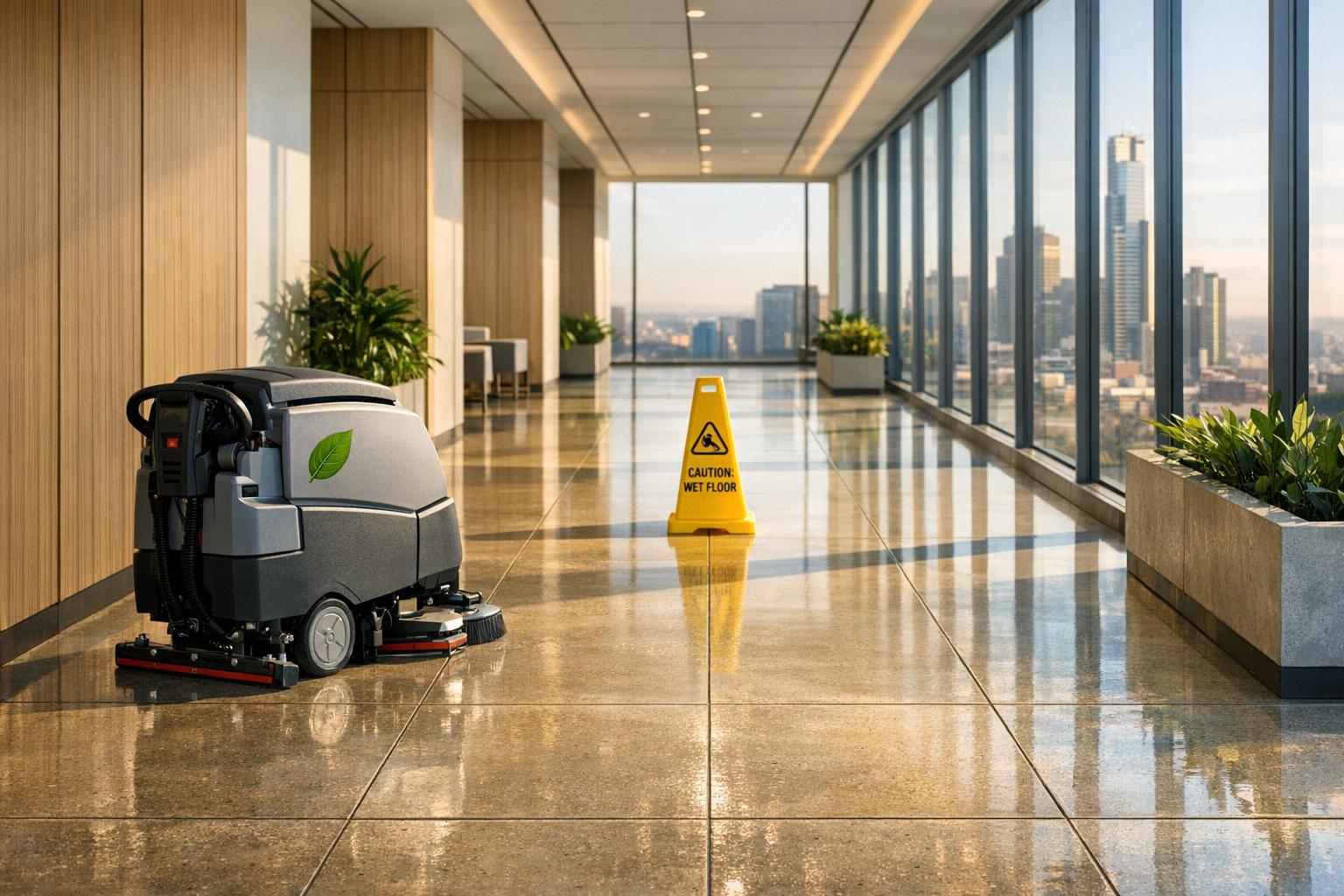
Maintaining clean office floors in Melbourne is essential for health, safety, and preserving a professional image. Melbourne’s unpredictable weather, heavy foot traffic, and clay soil make floor cleaning a daily challenge, especially in high-traffic areas like Collins Street. Here’s a quick guide:
- Daily Care: Sweep, vacuum with HEPA filters, and mop using a damp microfibre mop. Use entry mats to trap dirt and change mop water frequently.
- Deep Cleaning: Schedule quarterly or bi-annual deep cleans depending on office size and foot traffic. Use hot-water extraction for carpets and scrubbing or sealing for hard floors.
- Tools: Invest in commercial-grade equipment like walk-behind scrubbers, carpet extractors, and automated cleaners for efficient results.
- Eco-Friendly Products: Use pH-neutral and biodegradable cleaners like GECA-certified options or plant-derived formulas to protect floors and air quality.
- Professional Services: Engage professional cleaners for specialised tasks like anti-slip treatments and sealing, ensuring compliance with safety standards.
Clean floors aren’t just about appearances – they reduce hazards, improve air quality, and protect your flooring investment over time. Whether through daily upkeep or professional care, Melbourne offices can maintain safe, polished, and hygienic spaces.

Office Floor Cleaning Best Practices Guide for Melbourne Businesses
Daily Floor Maintenance Routines
Start your daily floor care by clearing away dry soil. This simple step helps protect floor finishes from the abrasive damage caused by dirt and debris. Pay special attention to high-traffic areas like entryways, corridors, and reception spaces, as these spots tend to accumulate the most dirt and pollutants. Below are some key routines to help tackle these challenges effectively.
Sweeping, Vacuuming, and Dusting
Sweep hard floors every day and use a HEPA-filter vacuum on carpets. When vacuuming hard surfaces, turn off the beater brush to avoid scratching the floor. For high-traffic areas like hallways and stairs, vacuuming every two to three days is crucial to minimise wear caused by abrasive dirt.
Melbourne’s clay soil can leave muddy tracks after rain, making entry mats a must. Place mats with a minimum depth of 90 centimetres at doorways to trap debris before it reaches your floors. Don’t forget to clean under and behind furniture regularly to prevent dust buildup.
Mopping Methods
Stick to a well-wrung microfibre mop – damp, not soaking wet. For hybrid and laminate floors, spray a pH-neutral cleaning solution directly onto the mop head instead of the floor to avoid liquid seeping into the joints. Prevent moisture damage by avoiding standing water on hard floors.
Change mop water frequently and ensure floors are dried thoroughly after mopping to avoid streaks and slippery surfaces. Steer clear of acidic cleaners like vinegar, ammonia, or general-purpose products, as these can wear down protective finishes like polyurethane lacquer. For offices in busy CBD areas like Collins Street or Chapel Street, a midday touch-up in shared spaces can help maintain cleanliness and hygiene throughout the day.
"A premium floor is not a purchase – it is an investment. The difference between a hardwood floor that remains beautiful for thirty years and one that looks tired and worn at ten comes down almost entirely to maintenance."
– The Flooring Centre Technical Team
Weekly and Periodic Deep Cleaning
Daily cleaning routines help maintain a polished look, but they don’t tackle the deeper grime that builds up over time. That’s where weekly or periodic deep cleaning steps in. For Melbourne offices, the frequency of these sessions depends on foot traffic. Larger offices – those with over 10 employees per 100 square metres – typically require quarterly deep cleans. Smaller teams, on the other hand, can often get by with bi-annual sessions.
The building’s age also plays a role. Properties in Melbourne that are over 20 years old may need cleaning 25–50% more often due to ageing infrastructure and less effective insulation. Location matters too. CBD offices near busy roads or construction zones accumulate more airborne particles, while offices in leafy suburbs like Fitzroy or Carlton deal with seasonal challenges like pollen and leaf litter. These factors highlight the need for specialised cleaning approaches, especially for carpets and hard floors.
Carpet Cleaning Methods
Vacuuming is essential for surface-level dirt, but it doesn’t address deeper, oil-based stains from body oils or food residues. For this, hot-water extraction is the go-to method for deep cleaning. In high-traffic areas, it’s best to schedule this method every 12–18 months. Post-cleaning, carpets need 4–6 hours to dry, though overnight drying is ideal to avoid any potential damage.
"Vacuuming is to carpet what sweeping is to hardwood: the fundamental maintenance act that determines long-term appearance more than any other single intervention."
– The Flooring Centre Technical Team
For Melbourne offices, autumn is an ideal time for professional carpet extraction. This timing helps clear out summer dirt before winter’s moisture and debris settle in.
Hard Floor Maintenance
Hard floors, like carpets, require specific care to stay in good condition. Materials such as tile, vinyl, and polished concrete need periodic scrubbing, sealing, and buffing to maintain their durability and appearance. For lacquered hardwood floors, a screen-and-recoat – a light sanding followed by a new topcoat – can refresh dull finishes without the expense or material loss of full sanding. Vinyl floors (VCT) benefit from regular stripping and re-waxing to prevent permanent scuff marks and wear.
Routine buffing is another key step. It removes micro-scratches, restores shine, and prevents dirt from embedding into the floor’s layers. For medium-sized offices, a cost-effective strategy is to alternate focus areas during quarterly sessions. Dedicate one quarter to carpets and the next to hard floor sealing. This way, all surfaces receive attention at least twice a year while staying within budget.
Next, we’ll delve into advanced tools and techniques to elevate floor care to the next level.
Floor Cleaning Tools and Equipment
Using commercial-grade tools for floor cleaning not only ensures efficiency but also delivers a professional finish. These tools are built to last and comply with Australian safety standards, making them ideal for both daily and periodic cleaning tasks. They help maintain the longevity of your floors while reducing the effort needed. The choice of equipment largely depends on the size and layout of your facility. For smaller to medium-sized offices with tight spaces, walk-behind floor scrubbers are ideal, as they can easily navigate around furniture and desks. On the other hand, ride-on scrubbers are better suited for larger areas like lobbies or warehouses, where they can cover more ground in less time and cut down on labour costs.
Modern cleaning machines take efficiency to the next level. Equipped with powerful motors and specialised brushes, they can tackle deep-seated dirt and stains that mopping simply can’t handle. Many also come with integrated drying systems, which help floors dry quickly and reduce the risk of slip-and-fall incidents. For carpeted areas, carpet extractors use hot water extraction to remove allergens and embedded grime, while floor burnishers bring back a polished, high-gloss look – perfect for professional spaces like lobbies or retail stores.
Automated Cleaning Equipment
Industrial robotic cleaners are changing the game for floor maintenance in Melbourne offices. Take, for instance, the FloorBot Quad 500, which uses AI, mapping technology, and sensors to clean autonomously. These machines don’t just save time by allowing staff to focus on specialised tasks – they’re also designed to be environmentally friendly. They use less water and fewer chemicals compared to traditional cleaning methods, making them a smart choice for sustainability-conscious businesses.
To get the best results from robotic scrubbers, always sweep or vacuum loose debris beforehand. Regular maintenance is also key – cleaning filters, brushes, and water tanks after each use helps prevent clogs and keeps the machine running smoothly.
Anti-Slip Treatments
Keeping floors safe is just as important as keeping them clean. Anti-slip treatments are a must for high-traffic areas like reception zones, hallways, and kitchenettes. After deep cleaning, make sure the surfaces are completely dry and free of residue before applying these treatments. This extra step helps minimise the risk of slips and ensures a safer environment for everyone.
With the right tools and techniques, floor cleaning becomes more precise and effective, setting the stage for advanced cleaning methods.
Eco-Friendly and Safe Cleaning Products
Choosing eco-friendly cleaning products not only safeguards your floors but also enhances indoor air quality, creating a healthier environment for everyone. According to the Australian Institute of Occupational Hygienists, commercial cleaning chemicals are a major factor in workplace air quality issues. This is especially important for modern Melbourne offices, where sealed windows and recirculated air systems are common.
Biodegradable and pH-Neutral Cleaners
For an environmentally responsible option, consider products certified by Good Environmental Choice Australia (GECA). A great example is the pH-7 Neutral Floor Cleaner ($31.50 + GST for 5L), which uses d-Limonene, a natural citrus solvent, to remove soil and oil without harsh acids or bleaches. Its pH-neutral formula (6.6–8.0) is gentle on alkali-sensitive surfaces like marble, terrazzo, and polished stone, preventing damage such as etching.
For timber or hybrid floors, Wash Wild Floor Cleaner is a standout choice. Priced at approximately $5.90 for a concentrated bottle, it boasts over 99% plant-derived ingredients and includes W4C®, a blend of native Australian oils developed with CSIRO. This formula effectively eliminates germs like E. coli and staphylococcus without the need for harsh chemicals. Users have rated it 4.8 out of 5, citing its streak-free finish on bamboo and timber floors. Both products are also greywater and septic safe, aligning with sustainable water practices in urban areas like Melbourne.
In addition to these options, it’s crucial to steer clear of harmful chemicals, as detailed below.
Alternatives to Harsh Chemicals
Avoiding substances like chlorine bleach, ammonia, and strong acids is essential. These chemicals can harm respiratory health and degrade floor finishes. As Sparkle Office explains:
"Conventional cleaning chemicals release VOCs that contribute to poor indoor air quality – a significant concern in sealed modern office buildings with recirculated air systems".
Safer alternatives include hydrogen peroxide disinfectants, which provide effective sanitisation, and enzymatic cleaners, which handle tough stains and grout without relying on strong acids. These options are both effective and less harmful.
For a DIY solution, mix one part white vinegar with four parts warm water. Use a microfibre mop and wring it out well to prevent moisture damage. Additionally, avoid products containing synthetic fragrances, sulphates, palm oil, or benzalkonium chloride to further protect both employee health and air quality. Always ensure the product is labelled as safe for your specific flooring type, especially for premium surfaces like timber, hybrid, or stone.
Professional Floor Care Services
Professional floor care services add an extra layer of expertise and efficiency to your office maintenance routine. While regular cleaning is important, these services go beyond basic upkeep. Using commercial-grade tools and proven methods, professionals help maintain your floors to a high standard, ensuring they also comply with Australian safety regulations.
Range of Floor Care Services
Withers Solutions offers a broad selection of floor care options tailored specifically for Melbourne offices. Their services include daily cleaning tasks like sweeping, mopping, and vacuuming, alongside more specialised treatments such as carpet extraction, tile and grout restoration, and hard floor stripping, sealing, and polishing. Additionally, they provide anti-slip treatments, which not only protect employees but also ensure compliance with workplace safety standards. These specialised services help safeguard your flooring investment while extending its lifespan.
In Melbourne, professional cleaning rates generally range from $30 to $50 per hour for standard office cleaning. For jobs requiring specialised equipment or certifications, rates can go up to $55 per hour. These costs reflect the inclusion of insurance, quality control, and expert care, far exceeding the national minimum wage of $23–$25 per hour. This level of service is a valuable addition to the cleaning routines already discussed, ensuring your floors receive thorough and professional care.
Custom Cleaning Plans for Melbourne Offices
Offices have different cleaning needs depending on factors like foot traffic and industry requirements. For example, high-traffic offices may require monthly deep cleans, while medium-traffic spaces might do well with a deep clean every 3–4 months. Low-traffic offices can often manage with bi-annual servicing.
To address these varying needs, Withers Solutions creates customised cleaning plans that combine daily maintenance with periodic deep cleaning. Many providers in Melbourne also incorporate the 5S method – Sort, Set in Order, Shine, Standardise, and Sustain – to maintain organisation and consistent quality. This approach caters to a range of environments, from creative agencies needing occasional resets to corporate offices aiming to uphold a polished image through structured checklists. By integrating these tailored plans with your existing maintenance efforts, you can ensure a consistently high standard of cleanliness across your Melbourne office.
Conclusion
Keeping office floors in Melbourne in top condition requires a mix of regular maintenance and professional care. Daily tasks like vacuuming and mopping help tackle surface dirt, while occasional deep cleaning focuses on removing stubborn contaminants in high-traffic areas. Together, these practices not only protect your flooring investment but also promote a healthier workplace.
Beyond cleanliness, well-maintained floors boost safety and leave a lasting impression. In bustling business districts like the CBD or South Yarra, polished floors can elevate your office’s professional image and help establish a strong reputation.
Investing in proper floor care also pays off in the long run. Professional cleaning services use advanced equipment and proven techniques to deliver thorough maintenance. Structured methods, such as the 5S approach, make ongoing upkeep more manageable and efficient. For tailored solutions, Withers Solutions offers expert services to prolong the life of your flooring while maintaining high hygiene standards.
Ultimately, clean floors are a cornerstone of a safe, healthy, and productive office environment, safeguarding both your team and your business assets.
FAQs
How do I choose the right cleaner for my floor type?
When selecting a cleaner, it’s important to match it with the type of flooring you have and the cleaning techniques it requires. For polished surfaces, stick to non-abrasive products to avoid damage. If you’re dealing with porous floors, sealants can provide added protection. Regular practices like sweeping, mopping, or applying hard floor sealants can go a long way in preserving the durability of your floors.
Not sure what’s best for your space? Professional services, like Withers Solutions, can guide you in choosing the right methods and products to keep your floors safe, hygienic, and long-lasting.
What’s the best way to reduce mud and grit on rainy Melbourne days?
Rainy days in Melbourne can bring in plenty of mud and grit, especially in high-traffic areas. To keep your office floors in good shape, make it a habit to sweep or vacuum regularly, focusing on areas near entrances where dirt tends to accumulate.
Adding mats or rugs at entry points is another effective way to trap dirt before it gets tracked further inside. This straightforward method not only keeps your floors looking cleaner but also helps to minimise wear and tear over time.
When should we book a professional deep clean for our office floors?
It’s a good idea to arrange a professional deep cleaning for your office floors every 3 to 6 months – or sooner if you notice visible dirt, stains, or wear that regular cleaning can’t handle. This not only helps maintain a hygienic environment but also extends the life of your flooring. Plus, it keeps high-traffic areas looking polished and safe, particularly after events or renovations.
Leave a Reply