
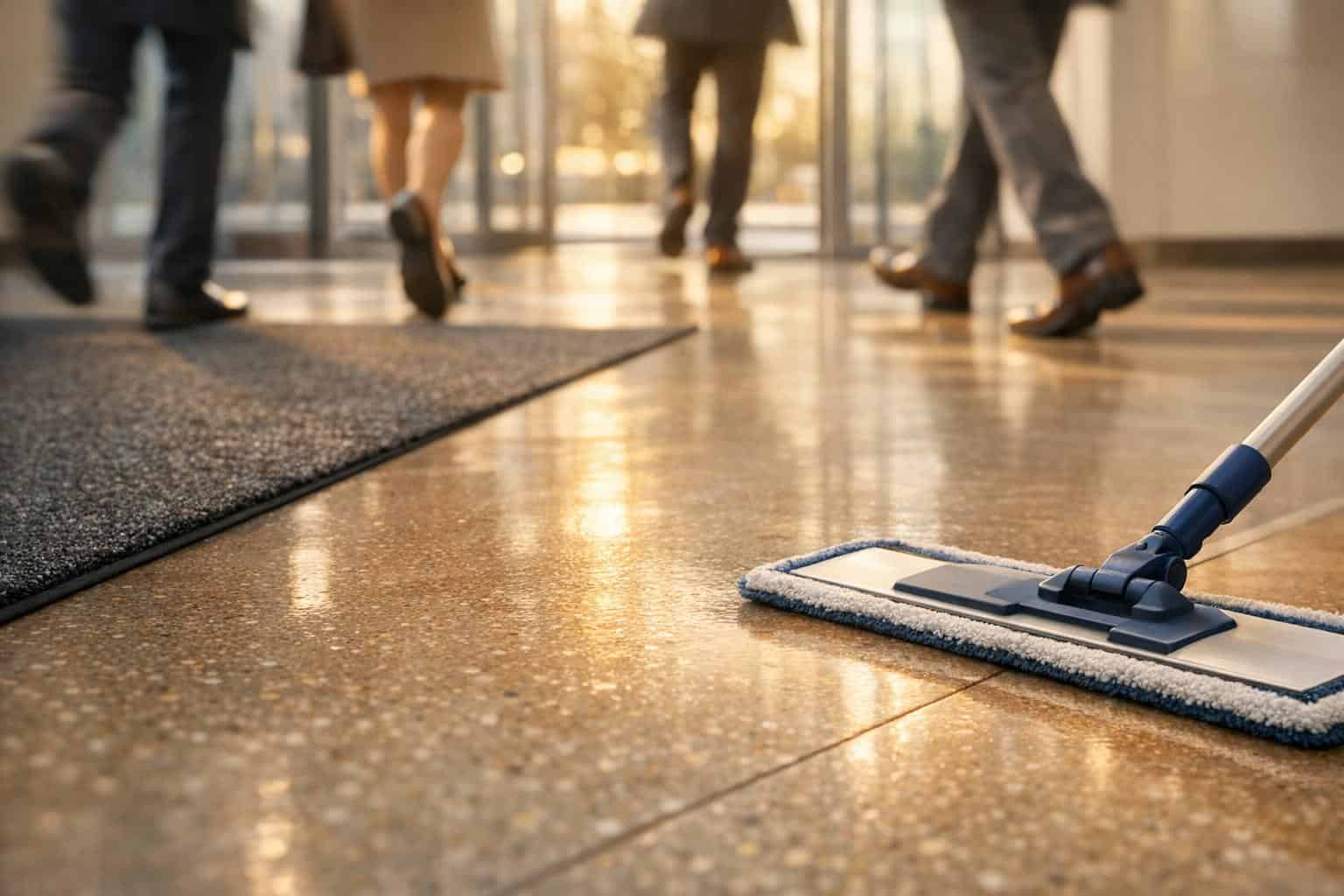
Maintaining floors in high-traffic spaces is essential to prevent damage, reduce safety risks, and extend the lifespan of your flooring. Daily cleaning, using proper tools and techniques, and addressing specific flooring needs can save money and create a safer environment. Here’s a quick guide to keep your floors in top shape:
- Daily Cleaning: Sweep or vacuum to remove dirt and grit. Damp mop hard floors and vacuum carpets daily, especially in busy areas like entryways.
- Use the Right Products: Choose pH-neutral cleaners for most surfaces. Avoid vinegar, ammonia, or steam mops on sensitive materials like hardwood or laminate.
- Preventative Measures: Install entrance mats to trap dirt and moisture. Use protective coatings on hard floors to shield against wear.
- Carpet Care: Vacuum daily with commercial-grade equipment and address spills immediately to prevent stains.
- Professional Help: Schedule deep cleaning periodically to tackle embedded dirt and maintain finishes.

Complete Floor Maintenance Guide for High-Traffic Commercial Areas
Around-the-Clock Floor Care: Maintaining Hard Floors in High-Traffic Facilities
Daily Cleaning for Hard Floors
Keeping hard floors in commercial spaces clean every day is essential for safety and maintaining a professional appearance. The Flooring Centre Technical Team highlights the risks of neglecting this routine:
Fine grit and particulate soiling… acts as a cutting abrasive between the sole and the lacquer surface. Each footstep grinds this grit against the finish.
A proper cleaning routine involves four steps: remove debris, deep clean, sanitise (if required), and protect. High-traffic areas like entryways, corridors, and breakrooms should be swept or dust-mopped daily, followed by damp mopping to prevent grime buildup. For less-used spaces, such as private offices, cleaning 2–3 times a week may be sufficient. Now, let’s cover the best sweeping and mopping techniques.
How to Sweep and Mop Properly
Start each day with a microfiber dust mop to remove loose dirt, and place entrance mats that are at least 90cm deep at all doorways to trap debris and moisture effectively. When mopping, it’s crucial to control the amount of moisture. Use a mop head that’s damp – not soaking wet – especially on sensitive surfaces like hardwood, laminate, or hybrid floors. For laminate and hybrid floors, spray the cleaning solution directly onto the mop head rather than the floor to avoid liquid seeping into the seams.
Entrance mats should be vacuumed daily and checked weekly for signs of wear. Address spills immediately to prevent staining and eliminate slip hazards.
It’s also important to use separate cleaning equipment for different areas. For instance, never use the same mop and bucket for restrooms as you do for lobbies or dining spaces. Once you’ve mastered sweeping and mopping, choosing the right cleaning products becomes the next step.
Selecting Appropriate Cleaning Products
Using the wrong cleaning products can harm your floors. For most hard surfaces – like lacquered hardwood, hybrid, and laminate floors – pH-neutral cleaners work best. They effectively clean without damaging the protective finishes. However, some floors require specific care. For example, oiled hardwood needs specialised cleaners that nourish the timber, as regular pH-neutral solutions can strip away the protective oils.
To check if an oiled floor needs maintenance, drop some water on the surface. If the water beads, the floor is still protected. If it soaks in and darkens the wood, re-oiling is overdue.
Avoid household products like vinegar or ammonia. The Flooring Centre Technical Team cautions:
Vinegar is mildly acidic and degrades polyurethane lacquer over time, dulling the surface sheen and compromising the protective barrier.
Steam mops are another no-go for hardwood, laminate, or hybrid floors. The heat and pressure force moisture into the joints, causing irreparable damage:
the damage caused by a single steam-mop session can render a floor section unrepairable.
For rubber flooring, stick to pH-neutral products to avoid chemical damage. Always identify your floor type before cleaning. For example, tiles can handle wet mopping, but hardwood and laminate should only be damp-mopped. When in doubt, consult your flooring manufacturer’s care guidelines.
Carpet Maintenance in Busy Commercial Spaces
In bustling commercial settings, keeping carpets in good condition is just as important as maintaining hard floors. While daily care keeps hard floors durable, carpets in high-traffic areas demand focused attention to ensure they last and look their best. Without proper maintenance, heavy foot traffic can drastically reduce a carpet’s lifespan – cutting it from 15 years to just seven. To combat this, it’s crucial to prioritise care in areas like entryways, corridors, and other frequently used spaces. As Jim Toth Jr., Manager of Commercial Maintenance at Mannington Commercial, explains:
"Proper cleaning of entryways, lobbies and main traffic lanes helps reduce the amount of soil migrating through the rest of a building. A suggested guideline is to spend 80 percent of time and resources on 20 percent of carpet".
Adding walk-off mats at entrances – about 3 to 4.5 metres (10 to 15 feet) deep – can capture up to 80% of dirt before it spreads to the main carpeted areas.
Effective Vacuuming Methods
Regular vacuuming is your first defence against dirt build-up, especially in high-traffic zones like entryways and hallways. Daily vacuuming is essential to keep carpets clean and reduce wear. Toth Jr. highlights:
"Using a dual-motor, upright canister or backpack with power heads to vacuum daily can reduce 80 percent of dry soil".
Here are some tips for efficient vacuuming:
- Opt for commercial-grade vacuums with HEPA filters, such as the Clarke Carpet Master 200 or ProTeam ProForce.
- Vacuum slowly and methodically; rushing can compromise results.
- For heavily soiled areas, use a pile lifter (a counter-rotating brush machine) to loosen embedded dirt before vacuuming.
- Change vacuum bags when they’re only half full to maintain strong suction.
- Avoid bonnet cleaning, which can harm carpet fibres and may void manufacturer warranties.
Once vacuuming is complete, addressing stains quickly is the next critical step.
Quick Stain Removal Techniques
Dealing with spills immediately helps prevent permanent stains. Start by blotting the spill with a white cotton towel – never rub – and treat an area three times the size of the stain to stop the liquid from spreading deeper into the carpet and resurfacing later. For spot cleaning, use a neutral-pH cleaner (pH 10 or lower) and test it by letting a small amount evaporate in a dish to ensure it won’t leave a sticky residue that attracts more dirt.
For stubborn stains that resist spot cleaning, hot water extraction is the go-to solution. Unlike shampooing or dry cleaning, hot water extraction removes deep-seated grime without leaving residues behind. With professional-grade equipment offering high-powered suction, carpets can dry in just a few hours, minimising disruption in busy environments.
Preventing Floor Damage in High-Traffic Areas
Effective daily cleaning is essential, but taking proactive steps can protect your floors from long-term wear and tear.
Installing Mats and Runners
Entrance mats play a key role in keeping dirt and debris at bay. With 90% of indoor dirt entering through doorways, stopping it at the source is critical. A layered mat system is the most effective solution: start with heavy-duty scraping mats at entrances to remove larger debris, followed by absorption mats to dry footwear and trap finer particles.
The type of mat you choose depends on the environment:
- Carpet fibre mats (nylon or polypropylene): Ideal for offices and retail spaces, these mats trap dirt and soak up moisture effectively.
- Rubber or nitrile mats: Best suited for warehouses and industrial areas, they offer excellent chemical resistance and grip.
- Microfiber mats: Perfect for zones requiring high cleanliness, as they can capture ultra-fine particles.
As MSC Direct highlights:
High traffic entrance mats are designed to withstand heavy footfall, effectively trapping dirt and moisture to maintain cleanliness and safety in commercial and industrial settings.
To maximise their effectiveness, ensure mats meet safety standards for slip resistance and surface height. Regular maintenance is equally important – vacuum or sweep daily and schedule deep cleanings to prevent dirt build-up and saturation.
While mats are an excellent first line of defence, other protective measures can further safeguard your floors.
Applying Floor Coatings and Finishes
Protective coatings act as a shield against moisture, chemicals, and abrasions. Jamie Gillespie from CPC Floor Coatings notes:
A well-maintained epoxy floor provides facilities with benefits that extend far beyond aesthetics. It protects the underlying concrete from structural damage, helps prevent slips and falls, and resists chemical penetration.
Epoxy flooring, when properly maintained, can last over 10 years, making it a cost-effective option for high-traffic areas.
The choice of coating depends on your flooring material:
- Epoxy systems: Highly effective for concrete surfaces.
- Polyurethane lacquer: Creates a durable barrier on hardwood floors.
- Oiled timber: Check its condition with a simple water test – if water beads, the finish is intact; if it soaks in, re-oiling is necessary.
To maintain these finishes, stick to pH-neutral cleaners and avoid acidic solutions like vinegar or harsh chemicals such as bleach, as they can degrade the protective layer . Steam mops should also be avoided, as they can cause delamination and swelling.
A real-world example comes from Flagship Facility Services, which implemented a customised floor care strategy for an airport between 2023 and 2024. By adjusting maintenance schedules to match traffic patterns and seasonal changes, they extended the flooring replacement cycle from 3–5 years to 5–7 years, even with a 25% increase in passenger foot traffic during this period.
Taking these steps can significantly extend the life of your flooring. For tailored advice and professional assistance, you can consult Withers Solutions (https://witherssolutions.com.au), experts in commercial cleaning and floor care.
Next, we’ll look into the importance of professional cleaning services for regular deep cleaning.
When to Use Professional Cleaning Services
Even with regular cleaning, dirt and wear can build up in high-traffic areas, leading to damage over time. Knowing when to bring in professional cleaning services can help extend the life of your floors while keeping them safe and looking their best.
Why Choose Commercial Cleaning Experts?
Professional cleaners come equipped with specialised tools and techniques that go beyond everyday cleaning. For instance, if a quick paper towel test reveals a grey film, it’s a sign that dirt has embedded itself into the surface. Other warning signs include sticky floors, a dull appearance, or discoloured grout – issues that regular cleaning often can’t resolve.
Experts tailor their methods to suit different flooring types. For example, they might use stripping and waxing for Vinyl Composition Tile (VCT) or pH-neutral cleaners for delicate rubber flooring. These techniques not only restore but also protect your floors from further damage.
The financial benefits of professional cleaning are hard to ignore. As Flagship Facility Services explains:
Replacing commercial flooring is costly and disruptive, which is why facility managers should try to extend its usable life for as long as possible.
One facility successfully extended its flooring replacement cycle, illustrating just how cost-effective professional cleaning can be. This underscores the importance of scheduled deep cleaning for high-use areas.
Scheduling Regular Deep Cleaning
In addition to professional services, routine deep cleaning is essential for maintaining your floors. High-traffic zones like entryways, kitchens, and bathrooms should be assessed weekly or monthly, while areas with less foot traffic may only need servicing quarterly or twice a year. Seasonal factors also play a role – for example, winter salt removal or spring HEPA vacuuming to tackle pollen can prevent lasting damage.
Regular deep cleaning complements daily maintenance by removing residues and protecting the floor’s finish. When booking professional services, consider combining tasks like floor stripping, waxing, or tile and grout restoration to get the most out of each visit. For facilities operating 24/7, day porter services can address spills and debris immediately, preventing permanent stains.
Safety is another key consideration. Slippery surfaces or poor traction may require professional anti-slip treatments to comply with Australian workplace safety standards. When choosing a provider, look for one that offers regular maintenance plans and expertise in techniques like stripping and sealing for hard floors.
For customised support, Withers Solutions (https://witherssolutions.com.au) offers a range of commercial floor care services designed to help you protect your flooring investment for the long term.
Conclusion
Keeping floors in top condition doesn’t have to be difficult. As Jim Toth Jr., Manager of Commercial Maintenance at Mannington Commercial, puts it:
Maintenance doesn’t have to be complicated. It’s a matter of establishing basic protocols and using the right products and equipment.
Simple steps like daily sweeping or vacuuming with HEPA filtration can eliminate abrasive dirt, while neutral pH cleaners (used at the correct dilution) help protect surfaces. Adding walk-off mats at entrances – ideally 3 to 4.5 metres in length – can significantly reduce soil being tracked inside, cutting down on cleaning efforts and costs. Address stains on carpets quickly and apply protective coatings to hard floors to minimise wear and tear.
Of course, some situations call for more than just routine care. By combining daily upkeep, preventative strategies, and periodic professional deep cleaning, you can extend the life of your flooring. For example, facilities using maintenance schedules based on foot traffic have stretched floor replacement cycles from every 3–5 years to 5–7 years, even with a 25% rise in foot traffic. This approach not only protects your investment but also ensures a safe and polished environment for everyone.
If you’re looking for customised floor care solutions to keep your flooring in great shape for the long haul, Withers Solutions offers tailored maintenance programmes designed for Melbourne’s bustling commercial spaces. Learn more at Withers Solutions.
FAQs
How do I identify my floor type before cleaning?
To figure out what type of flooring you have, take a close look at the surface. Pay attention to details like the texture, finish, or any patterns that might give you a hint. Some common flooring types include vinyl, epoxy, polished concrete, terrazzo, rubber, carpet tiles, or LVP (luxury vinyl planks).
Identifying the material is important because it helps you choose the right cleaning products, tools, and methods. Using the wrong approach could damage the floor or shorten its lifespan, so it’s worth taking the time to get it right.
How often should high-traffic floors be professionally deep cleaned?
High-traffic floors need regular professional deep cleaning to keep them in good shape and extend their lifespan. For busy commercial spaces, a monthly deep clean is typically advised, though some areas may require more frequent attention. This process helps eliminate deeply embedded dirt, reduces wear and tear, and ensures cleanliness and safety standards are consistently met in heavily used spaces.
What are the early signs my floor finish needs recoating or re-oiling?
If your floor is starting to lose its shine, show surface scratches, or has spots where the finish has worn away, it’s a clear sign it might need recoating or re-oiling. For hardwood floors, keep an eye out for grey patches – these often appear when the protective layer has thinned or disappeared. These are strong indicators that it’s time to refresh the finish to bring back both the look and the protection of your floors.
Leave a Reply